A month ago, I bought some vinyls for my room. Then I started thinking about why so many people still collect them. If you think about it, it is highly inefficient. When I want to listen to a song, I have to take the record out of the sleeve, be extra careful not to damage the grooves, carefully place it on the turntable, and lower the needle. If I want to listen to a specific song, I don't have the luxury of just clicking a button on Spotify to switch songs. I have to find it on the record physically and hope I land somewhere near the beginning.
So why do people still own vinyls?

A similar case came up with a friend of mine who recently bought a 1996 car for $20k; for the same price, you can lease a brand-new Tesla Model 3 for three years. Not to mention, because of its age, half the stuff on the car is broken: the oil tank started leaking after he hit a pothole a bit too hard, the dashboard light doesn't work, and he can't drive it in the winter because the snow and salt are bad for the car. So then why are those cars in such high demand that a purchase like that is actually considered a steal?
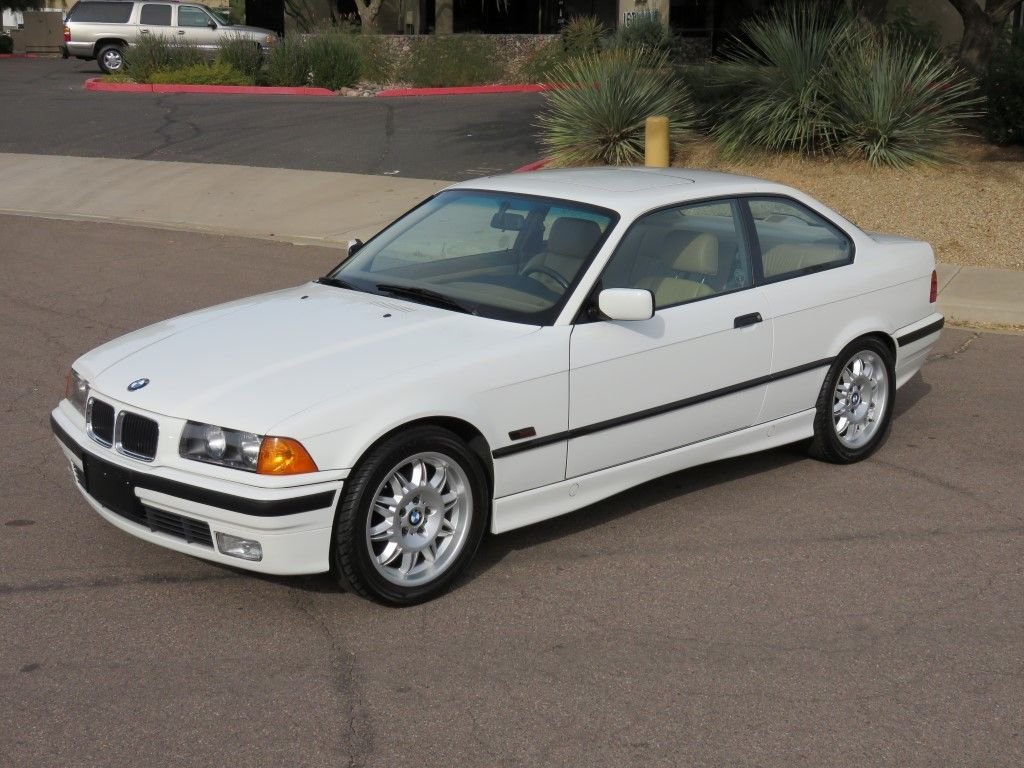
The obvious answer for most people would be that these are bad purchases: the vinyl is impractical, the car is unreliable, and both are objectively less convenient than their more advanced successors. Yet for the people who actually choose to buy them, they could be perfectly valid.
We often judge technology and innovations by how much time they save, how much hassle they remove, and how much more freedom they give us. But what exactly do we mean by freedom? If freedom is understood merely as freedom from having to perform a task, then every reduction in effort could be an improvement. But this ignores another kind of freedom, one that could be more meaningful in our lives: the freedom to participate in an activity, to understand it, and to choose for yourself how it is done.
On a note related to my own work, coding looks so different right now than it did 5 years ago. Nowadays, Claude Code can write a piece of code and fully test it in an hour; an equivalent task 5 years ago would have taken someone a week. Yet, what happens when efficiency becomes the unquestioned measure by which every activity is judged? If you ask me about a piece of code I wrote 5 years ago, I can explain to you every single decision behind it down to the last bitwise operator, yet now, I sometimes don't even know what a whole file does for a given project I am working on, maybe just faintly how it fits into the system. Is that truly better or worse? I don't really know; it does get work done a lot faster, but it does feel like I didn't really write the code. I just thought about how it should be written and checked that it was done, but it isn't really mine.
What does it mean to be mine though? In the legal sense, ownership is a matter of rights: the person who owns the car has the legal right to possess and use it, while intellectual property law determines who can reproduce, modify, or distribute a piece of software. But the truer sense of belonging comes from understanding how everything works from first principles and actually working on it yourself with your hands.
What really bothers me about this is not Claude Code, vinyls, or even cars. It is the possibility that efficiency has stopped being a property of a tool and become a way of evaluating everything. A forest becomes timber. A river becomes hydroelectric potential. Time becomes productivity. The danger of modernity isn't that machines are replacing human beings. It could be that we increasingly learn to look at everything as something that should be optimized.
Of course, I am not saying that all inconvenience is inherently valuable. Still, chosen inconveniences are valuable because they help us live more meaningful lives and experience the world the way WE want to. Nothing is liberating about doing the dishes and the laundry by hand or doing math with your brain rather than using a calculator because it feels more "authentic." If I were arguing that every form of effort is valuable because it is effort, then I would be romanticizing inconvenience for its own sake, so I guess the distinction I must make is between effort that merely obstructs an activity and effort that constitutes it, yet everyone would draw that line differently.
What if I merely want the experience of taking my vinyl out of the sleeve, slowly putting it into the turntable, and putting the needle down on the record? What if my friend thinks that repairing the car and truly understanding how it works isn't an inconvenience but an experience of being a more intentional car owner?
Yet this is different for every single person, so maybe the best thing about technology isn't that we get to do less, but that we get to pick what kind of hassle we want to put ourselves through.